Hard Milling: Machining Hardened Steel Where the Rules Change
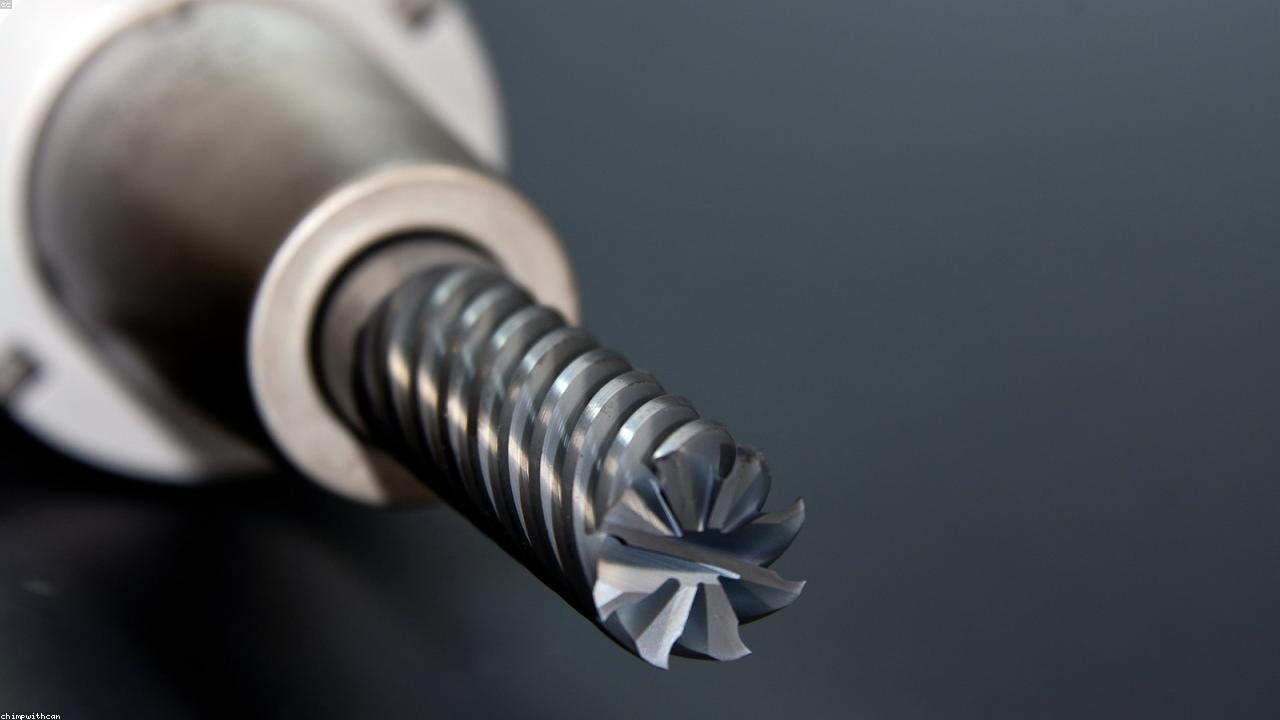
Every machinist learns early that hardened steel is the material you machine before it is hardened — that the sensible order is to cut the soft steel, heat-treat it, and then only grind or spark-erode the finished features. Hard milling breaks that rule deliberately. It takes the fully hardened part — tool steel and mold steel at 45 to 65 HRC, material hard enough to scratch most cutting tools — and machines it directly with a milling cutter, at speed, to a finish that can rival grinding. It is not a marginal technique for specialists; it is how much of the modern mold and die world works, and it has changed the economics of making hardened parts.
This guide is the foundations reference for that technique. It explains what hard milling is and the workflow it replaces, why the normal rules of milling stop applying once the work is hard, the three pillars that make hard milling succeed, when to hard-mill rather than grind or EDM, and the tooling, machine and parameters the job demands. It sits in the machining-practice layer of this library: the parameters master guide sets out the general tuning method, the materials guide explains where hardness sits in the material landscape, the toolpath-strategies guide covers the high-efficiency paths hard milling leans on, and the chatter guide applies with extra force here. Where hard milling meets a finish beyond its reach or a process-cost decision, the surface-finish guide and the cost guide take over.
What hard milling is — and the workflow it replaces
Hard milling is the direct machining of workpiece steel that is already in its hardened, final-heat-treated state — conventionally defined as starting around 45 HRC and running up to the high 50s and 60s HRC of fully hardened tool steel. Instead of the classic mold-making chain — machine the cavity in soft steel, heat-treat the whole block, then finish the hardened cavity by grinding or sinker EDM — hard milling machines the cavity after hardening, on a machining centre, often to a finish that needs only light hand work.
The workflow change is the whole point, because the old chain carries hidden costs that hard milling removes. Machining soft and then heat-treating means the part moves — hardening distorts steel, sometimes by fractions of a millimetre, and every feature machined soft has moved by the time the part is hard. The old answer was to leave the cavity oversize, harden, and then finish the hardened geometry by processes that could cut it — grinding where accessible, EDM for the rest, and hand polishing to blend the transitions and remove EDM’s damaged surface layer. Each of those steps adds setups, queue time and the risk that the finish work itself drifts from the datums established in the soft state.
Hard milling compresses the chain: rough and semi-finish in a state close to final, harden, and finish the hardened cavity directly on the same machining centre that roughed the block, holding the geometry against datums that never changed. Shops that adopt it consistently report that much of their EDM and hand-polishing work simply disappears — not because those processes are obsolete, but because the freeform cavity surface no longer needs them. The technique is at its strongest exactly where the old chain was weakest: complex, sculpted mold and die forms that used to demand EDM plus polishing can now be milled to a near-finished surface in one setup.
Why the rules change
Hardened steel is a different material to cut, and the difference is not a matter of degree — it is a change in kind. Three physical facts rewrite every rule you carry from ordinary milling:
The tool is no longer obviously harder than the work. In normal milling the carbide tool is vastly harder than the soft steel it cuts, and the edge survives because the material gives way. At 60 HRC the workpiece approaches the hardness of the cutting edge itself. A sharp edge — the geometry you want everywhere else — now fails instantly, chipping and crumbling against material that is nearly as hard as it is. The tool must be stronger at the edge, not sharper, which is why hard milling turns the usual geometry rules on their head.
Heat is the enemy, and it is extreme. Cutting hardened steel generates intense heat at the edge — enough to soften a tool that is not designed for it. The heat has to go somewhere, and in hard milling the discipline is to let it go into the chip: the edge heats, the chip carries the heat away, and the tool survives. Anything that shocks the hot edge — a flood of coolant, an interrupted cut, a sudden change in load — risks thermal cracking or chipping that no coating can prevent.
Nothing flexes. Hardened steel does not yield to cutting force the way soft material does; every bit of force and vibration is transmitted back through the tool, the holder and the machine. A setup that would chatter mildly on soft steel will chip a tool or ruin a finish on hardened steel. As the machining guides put it, you cannot plow through hardened material — you must slice it, with a system rigid enough that the slice is clean.
The three pillars of hard milling
From those physical facts come the three practices that define the technique:
1. Light, controlled engagement — and constant load. Hard milling cuts with modest, carefully managed engagement rather than heavy bites, and increasingly it uses the high-efficiency toolpaths that hold the tool at a constant, low radial engagement — never letting it bury itself or spike in a corner. Depth of cut falls as hardness rises, and the axial bite is a small fraction of the tool diameter at the hardest levels. This is the “slice, don’t plow” rule made concrete: small, even, constant cuts that keep the load steady and the edge intact. Because the strategy is constant-load cutting, the whole family of adaptive and trochoidal paths — and everything the toolpath guide explains about chip thinning — applies directly.
2. No flood coolant. The counterintuitive pillar. The instinct to flood a hot, hard cut with coolant is exactly wrong: the edge runs hot by design, and dousing it causes thermal shock — micro-cracking that kills the tool. Hard milling is run dry, with compressed air or an oil-mist, so the heat flows into the chip and away. Air also clears the fine, hot chips that would otherwise sit in the cut and be re-cut. Shops new to hard milling routinely damage their first tools by reaching for the coolant that served them everywhere else.
3. Strong-edge tool geometry. Because a sharp edge chips instantly, hard-milling tools carry geometry built for the opposite: negative or neutral rake, strengthened cutting edges with a small chamfer or hone instead of a sharp corner, moderate helix angles that resist chatter, and — on the advanced tools — variable helix and pitch to break up vibration. Corner radii replace sharp corners wherever the part allows. The design goal throughout is edge strength and stability, not cutting sharpness.
Hard milling, grinding or EDM?
Hard milling does not replace grinding and EDM; it redraws the boundary between them, and choosing well matters because a hardened part is unforgiving of the wrong process. The selection logic runs geometry first, then surface and tolerance, then risk:
| Hard milling | Grinding | EDM | |
|---|---|---|---|
| Best at | Freeform 3D surfaces — mold cavities, sculpted forms, blends | Flatness, parallelism, precision seats and fits — surfaces a wheel can reach | Deep ribs, narrow slots, sharp internal corners, any feature a cutter cannot reach |
| Its weakness | Sensitive to vibration, overhang and load spikes; chipping is the failure mode | Geometry limited by wheel access; risk of grinding burn and thermal damage | Leaves a recast (white) layer that often needs polishing or grinding off |
| Independent of work hardness? | No — tooling must match the hardness | Yes, within reason | Yes — sparks erode any conductive steel |
| Typical role | The workhorse for complex hardened surfaces | The finishing process for critical flat/cylindrical datum surfaces | The fallback for geometry milling cannot reach |
The practical synthesis most mold shops run is a hybrid: hard-mill the freeform form after heat treatment, grind only the critical-to-quality faces that need the best size, flatness and finish a wheel can deliver, and reserve EDM for the geometry that forces it — deep ribs, narrow slots and sharp internal corners where no cutter can go. In that plan each process does what it does best, and the part moves through fewer setups than the old all-EDM chain. One caution applies across the board: distortion. Removing large amounts of material after hardening invites warpage, especially in thin or asymmetric parts, so the process discipline is to leave only modest stock for the hardened state and machine the remaining form carefully — the soft-state roughing does the heavy removal, and the hardened work is finishing, not hogging.
The tooling ladder
Tool selection for hard milling follows the hardness of the actual workpiece, not its name — two steels both called “mold steel” at different hardnesses want different tools. The ladder, broadly:
- Micrograin carbide, coated — the everyday tool for the lower and middle hard-milling range, roughly 45 to the high 50s HRC. Modern coatings — the AlTiN-family and nano-multilayer types — hold their hardness at the temperatures hard milling generates, which is what makes coated carbide viable where older grades were not. Coated carbide is the default starting point for most shops entering hard milling.
- CBN (cubic boron nitride) — the tool for the hardest work, roughly the mid-50s and up. CBN is second only to diamond in hardness and keeps cutting at speeds and hardnesses that destroy carbide, often outlasting it many times over on 60+ HRC work. Its trade-off is brittleness: CBN edges are strong in compression but chip on interrupted cuts and shock, which is precisely why the light, constant-load strategy and the no-flood rule matter most when CBN is in the holder.
- Ceramic — used in some high-speed finishing applications on hardened steel, where its heat resistance lets it cut at very high speeds. It is more specialist and more brittle still, and in milling it is less common than in the equivalent hard turning operations.
Two geometry rules run across all three. First, never a sharp corner: the edge needs a radius or chamfer, and the tool needs the strongest profile the feature allows — ballnose and corner-radius tools dominate hard-milling finishing for exactly this reason. Second, stub and short: minimize overhang ruthlessly, because every millimetre of tool hanging out is a lever that will flex and chip the edge. A length-to-diameter ratio around four to one is a common working limit, and going beyond it demands lighter cuts still.
Runout: the silent killer
No factor separates successful hard milling from a nightmare as reliably as runout — the tiny wobble of the tool in the holder. In soft-steel work a few microns of runout cost you a little finish and a little tool life. In hardened steel, where the edge is already at its strength limit, runout means one flute carries more than its share of the load and chips — and the effect is brutal: at high hardness, runout measured in tens of microns can cut tool life dramatically, and even a few extra microns of runout measurably shortens it. The practical consequence is that hard milling is where the premium toolholders earn their keep — shrink-fit and hydraulic holders that grip the tool straight and true — and where the basic collet chuck that is fine elsewhere becomes a false economy. Check and hold runout low, and measure it at the tip where it matters, not just at the holder.
The machine is the foundation
Hardened steel transmits every force and every vibration back through the machine, so the machine that can hard-mill well is not the fastest or the cheapest — it is the rigid and thermally stable one. Three machine qualities matter most:
- Rigidity and damping. A heavy, stiff structure with good vibration damping is the non-negotiable base. The machine’s weight, casting and construction — the same structural story the spec-sheet guide reads from the weight column — decide whether the cutting edge stays calm or chatters itself to pieces. This is also where a used or budget machine that “does fine” on soft steel reveals itself as unequal to hard work.
- A high-speed spindle. Because hard milling uses small tools at modest engagement to reach the surface speeds the hardness demands, the spindle must spin fast — machines built for hard milling commonly run into the tens of thousands of RPM. A spindle ceiling of a few thousand RPM — plenty for general work — is generally not enough to hard-mill at the speeds the process wants.
- Stability over time. Long finishing runs on a hard block generate heat that walks the machine’s geometry; thermal stability — in the structure and the spindle — is what lets the last pass land on the same geometry as the first.
For a shop considering hard milling, the machine question comes before the tooling question: the technique is a system capability, and a machine without the rigidity, speed and stability is the ceiling no tool can break. The machine-selection guide and the spec-sheet guide are the right reading before committing.
Parameters: start from the hardness
Cutting parameters for hard milling are set by the hardness of the work, and they fall as the hardness rises. The starting bands below are engineering rules of thumb to verify against the toolmaker’s own recommendation for the specific tool — they are a place to begin tuning, not a substitute for the tool’s data:
| Workpiece hardness | Cutting speed | Feed per tooth | Axial depth of cut |
|---|---|---|---|
| Up to ~45 HRC | Highest of the range | Largest of the range | Largest of the range |
| ~45–58 HRC | Drops noticeably | Drops to a few percent of tool diameter | Drops to a small fraction of tool diameter |
| ~60+ HRC (full hard) | Lowest — a fraction of the soft-steel speed | Lightest — around one to two percent of tool diameter | Lightest — a few percent of tool diameter |
Two practices complete the parameter picture. Climb mill whenever possible: climb milling is the standard recommendation for hard milling, because the cutting action is cleaner and the tool meets the work more predictably than in conventional milling. And watch the wear mode: gradual flank wear along the edge is the normal, acceptable life of the tool, but chipping or a sudden change in sound or finish means the tool was overloaded, the setup flexed, or a cut interrupted — stop and fix the cause rather than pushing on. Because the edge is at its limit, hard-milling tools are replaced on condition, and a tool run past its life fails by breaking, not by going dull gracefully.
Frequently asked questions
What hardness is “hard milling” actually for? Conventionally, machining workpiece steel that is already hardened — starting around 45 HRC and running up to the high 50s and 60s HRC of fully hardened tool steel. Below that range you are machining in a normal, easier regime; above the mid-50s you are in the full-hard range where the most demanding tooling (CBN), the strongest geometry and the most rigid setups come into play. Tools are selected by the workpiece’s actual hardness, not by its name.
Why not just machine soft and heat-treat afterwards? Because hardening moves the part. Heat treatment distorts steel, sometimes by fractions of a millimetre, so every feature machined soft has shifted by the time the part is hard — which is why the old workflow finished hardened geometry by grinding and EDM and then blended the transitions by hand. Hard milling machines the cavity after hardening, against datums that never changed, eliminating the distortion problem and most of the EDM and hand-polishing that the old chain required.
When should I hard-mill instead of EDM or grind? Start from geometry. Hard-mill freeform 3D surfaces and sculpted mold forms — the work that used to force EDM plus polishing. Grind the critical flat and cylindrical faces that need the best size, flatness and finish a wheel can deliver. Use EDM for the geometry milling genuinely cannot reach — deep ribs, narrow slots, sharp internal corners. In practice most shops run a hybrid: hard-mill the form, grind the critical datum faces, and reserve EDM for the forced geometry.
Why does hard milling use no coolant? Because the edge is designed to run hot and the heat must go into the chip. Flooding a hot, hard cut with coolant causes thermal shock — micro-cracking that chips and kills the tool. Hard milling is run dry or with compressed air / oil-mist, which clears the fine hot chips and lets the heat leave with them. Reaching for flood coolant out of habit is one of the most common ways new hard-milling shops destroy their first tools.
Can any CNC machine do hard milling? Only a machine with the right foundation. Hardened steel transmits every force and vibration back through the machine, so hard milling needs rigidity and damping, a high-speed spindle to reach the surface speeds the hardness demands, and thermal stability for long finishing runs. A machine that is fine for general soft-steel work may be wholly unequal to hard work — which is why the machine decision comes before the tooling decision, and why the selection guide treats capability as a system question.
Bottom line
Hard milling is the deliberate decision to machine hardened steel directly — and it works by accepting that every normal rule of milling has been rewritten. The workpiece is nearly as hard as the tool, so edges must be strong rather than sharp. The heat is extreme, so it must leave with the chip rather than be shocked away by coolant. Nothing flexes, so the toolpath, holder and machine must keep the cut light, constant and calm. Run by those three pillars — controlled engagement, no flood coolant, strong-edge geometry — hard milling lets the mold and die shop cut the hardened cavity directly on the machining centre that roughed it, in one setup, against datums that never moved, and send much of the EDM and hand-polishing of the old chain to history. The machine must be rigid and fast enough to carry it, the tooling must climb the carbide-to-CBN ladder with the hardness, the runout must be held to a few microns, and the parameters must be tuned down as the hardness rises. Get the system right and hardened steel stops being the material you route around and becomes just another job the machine can finish.
This guide is part of the CNC Media guides library — the hard-machining foundations reference, deliberately free of prices and of any single toolmaker’s catalogue to promote.