CNC Machining for Mold & Die: What's Different
Consider the difference between a machine shop that makes parts and a mold shop that makes molds. The part shop cuts a batch of brackets, ships them, and its work is done. The mold shop cuts one cavity, then another, polishing steel for days, and when the mold is finished it is mounted in an injection press where it shapes the same product — a phone case, a dash panel, a lens — tens of thousands of times. Every one of those parts carries the mold’s surface finish, its dimensional truth, its steel’s polish. A scratch in the cavity that a shop might shrug at in a bracket is, in a mold, a flaw reproduced on every single part the mold ever makes. The part shop machines parts; the mold shop machines the tool that makes the parts — and that single difference changes everything downstream: the materials, the geometry, the processes, the tolerances and the risk.
This guide is the mold-and-die reference of this library’s application-industry topic — the pillar overview of what is different about CNC machining for molds and dies. It explains the workpiece a mold shop cuts, the material-and-heat-treatment logic that orders its work, the geometry that ordinary production machining never meets, the milling-plus-EDM chain that finishes a cavity, and why precision and surface finish carry a weight here they carry nowhere else. The deeper disciplines it points to have their own guides: machining hardened steel once the mold is heat-treated, specifying and measuring finish and tolerance, choosing materials by their machinability and service, and the machine families and axes a mold shop runs on. Terms like EDM, the ball nose end mill, spindle and CNC are in the glossary.
Mold and die work is tooling, not production
The first thing to understand about mold and die machining is that the workpiece is not a product — it is a tool, and the tool’s only job is to make the product well. A mold or die is a precision one-off: engineered for a single part design, machined once, and expected to produce that part within tolerance for its whole life. The vocabulary announces the structure. In an injection mold, the cavity shapes the part’s outside and the core shapes its inside, and the two close on each other leaving the thin wall of the part between them; both sit in a mold base of standard plates that carries the cooling lines, the ejection system and the mounting. Around the core and cavity cluster the inserts, the lifters, the sliders that form undercuts, the ejector pins — each a machined component in its own right. “Die” usually means the metal-forming counterpart — a stamping die that shapes sheet steel, an extrusion die — often working at higher pressures on harder materials, but the machining story is the same: complex geometry, difficult material, made to shape other things.
Because the mold is the tool, its quality is not a property of one part but of every part the tool produces. A cavity machined a few microns off, a parting line that does not seal, a finish too rough to release the plastic — each flaw is replicated across the life of the mold, in a tool that cost a small fortune in engineering and machining time. This is why mold work carries a discipline production work does not: the consequences of a mistake multiply by the mold’s entire production run. And because every mold is a one-off, none of it benefits from the learning curve of a repeat batch — each new cavity is a new geometry, a new set of decisions, a new chance to be wrong.
The material ladder and the heat-treat logic
Mold steels are chosen by the life and service the mold must survive, and the ladder runs from machineable pre-hardened grades to fully hardened tool steels machined after heat treatment:
- Pre-hardened mould steel (P20 and its cousins) runs at roughly 28–34 HRC — hard enough for a production mold’s life, soft enough to machine and polish readily. It is the general-purpose choice for conventional injection molds: the shop buys it pre-hardened, machines it through, and never sends it out for heat treatment.
- Hot-work die steel (H13 and similar) is the high-demand grade — the mold that runs hot, sees high pressure, and must hold its temper across a long life. It is supplied soft, machined to rough shape, then heat-treated to hardness in the mid-40s to low-50s HRC, and finished in the hardened state.
- Stainless and high-polish grades (S136 and the optical-steel family) serve molds that need corrosion resistance or a mirror finish — transparent and medical parts — trading some machinability for polishability.
- Aluminium serves the low-volume end: prototype and bridge tooling that runs for a few thousand parts, where speed and machineability beat steel’s life.
The ordering logic of the whole trade lives in the phrase machine it soft, or machine it hard. A shop can rough a core in soft steel, send it out for hardening, and finish it hard — accepting that heat treatment distorts steel, so the finish cut must chase a geometry that moved. Or — the modern route, covered in depth by the hard-milling guide — the shop can harden first and cut the fully hardened steel directly, removing heat-treat distortion from the dimensional chain entirely. Hard milling is what lets a cavity be roughed, hardened and finished with the finish cut knowing exactly where the geometry sits. The trade is in the cutting: soft steel machines fast and wears tools slowly; hardened steel at 45–60 HRC demands the high-speed spindles, the coated carbide and the light-finish discipline that the parameters and toolpath references describe.
Geometry that production machining never meets
Mold cavities are freeform. A phone case, a turbine blade die, a lens core — these are sculpted 3D surfaces, not prismatic features, and the geometry alone separates mold work from most production machining. Three characteristics dominate:
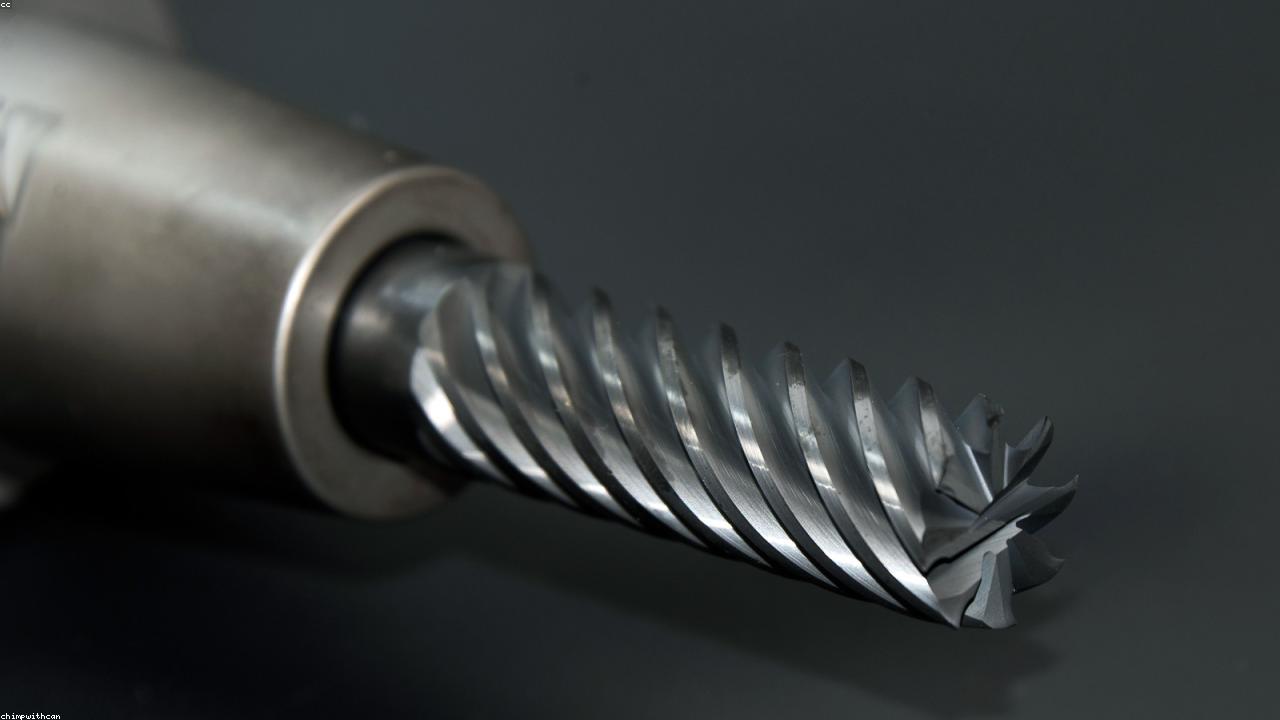
Surfaces, not features. The cavity is a continuous curved surface, and it is machined with tools shaped for surfaces — above all the ball nose end mill, whose rounded tip leaves a surface of scallops rather than flats. The height of those scallops is set by the stepover between passes, and the stepover is set by the finish the mold must carry: a coarse stepover roughs a cavity fast and leaves it visibly ridged; a fine stepover holds the surface to the finish the polishing bench will accept. Choosing the stepover, the ball-nose diameter and the toolpath for a freeform surface is the core of mold CAM work, and its output is governed by the finish-and-tolerance spec the drawing demands.
Geometry no cutter can reach. A milling cutter is a spinning cylinder with a radius, and the radius sets hard limits: an internal corner is machined at best to the radius of the tool, a deep narrow rib flexes any end mill that tries it, an undercut is out of reach entirely. Where the geometry falls past those limits, mold work calls in EDM — electrical discharge machining, which erodes conductive steel with sparks and knows no hardness and no tool-radius limit. Sharp internal corners, deep ribs and fine detail that milling cannot produce are the classic EDM province, and the workflow of a cavity is as much about deciding where the mill stops and the EDM begins as about either process alone.
Hardness after heat treatment. Much mold finishing happens on steel too hard for ordinary milling, which is why the mold shop’s spindles spin fast and its finishing is a discipline of light cuts and controlled engagement rather than brute metal removal. The hardened-cavity finish pass, the many-axis reach of the modern mold machine, and the 5-axis setups that keep a ball nose engaged to a steep wall without re-fixturing are all responses to geometry that is simultaneously freeform, deep and hard.
The process chain: mill, burn, bench
A mold is not machined in one pass; it is built by a chain of processes, each leaving a controlled allowance for the next, ending in work no machine does at all:
Rough machining removes the bulk of the steel, often while it is still soft — hogging out the general form of the core and cavity, deep-drilling the cooling lines through the plates, and leaving a uniform allowance for the stages to come. Semi-finishing refines the form and evens the remaining stock so the finish pass meets a consistent surface rather than islands of leftover metal. Finish machining cuts the final geometry in the hardened steel — the fine-stepover ball-nose passes that define the surface the part will wear, and where 5-axis and high-speed machining earn their place by holding the tool to the surface at a consistent engagement. Then EDM takes the detail: the sharp internal corners, the deep ribs, the textures no end mill can reach, burned with electrodes — copper or graphite forms machined as the mirror of the detail they will erode, themselves small mold parts made by the same CAM discipline, consumed in the burn. Wire EDM cuts the precision holes and the insert and core-pin openings. And around and after the machining sits benching — the skilled handwork that carries a cavity from machined to finished: polishing the steel to its required luster, fitting the inserts, spotting the parting line so it seals without flash, texturing the surface for the part’s cosmetic requirement.
The two facts that surprise outsiders are how much of this chain is CAM and machine, and how much still is human. A modern mold shop machines a cavity closer to finished than ever — high-speed finishing off the machine can approach a polish that once required hours of handwork — but the final benchwork, the polishing of a mirror cavity, the judgement of a parting line, remains some of the most skilled manual work in manufacturing. Mold making is a trade that has absorbed CNC completely and still cannot automate its last mile. The probing and inspection and metrology disciplines join the chain as well: a core and cavity worth a fortune in machining is verified against the model — a CMM probing the finished form — before it is ever trusted to make parts.
Precision, and the cost of being wrong
Mold tolerances are ordinary by the standards of fine machining — insert and cavity work commonly holds the hundredth-millimetre class (±0.01 mm), and high-precision work reaches the micron class — but the stakes of those tolerances are not ordinary. A machined bracket held a hundredth over is a bracket to scrap and remachine. A cavity held a hundredth over is a cavity that makes parts a hundredth over — a thousand of them before anyone measures the thousandth — in a tool whose machining cannot simply be repeated. Mold work concentrates risk because it is high-value, one-off and self-multiplying, and the shop disciplines follow: simulation before the expensive cut, probing and measurement at the stages where an error is still cheap, and a tolerance budget that knows which surfaces are cosmetic and which are functional.
The cost structure of a mold explains the care. A mold’s price is dominated not by its steel but by the engineering and machining poured into a one-off — the design, the CAM, the long finishing passes, the EDM, the benching, the trial iterations that tune the mold to the part. Cavity count is the lever that scales it: one cavity makes one part per cycle, four make four, and the mold maker and the buyer trade tooling cost against per-part cost across the life of the program. Cutting these decisions finely matters because a mold is committed early — the most expensive errors in tooling are the ones found after the steel is cut, when a design change means machining a cavity that is already hardened, polished and nearly finished.
What running a mold shop means for the floor
The differences accumulate into a shop floor unlike a production shop’s. Cycle times are long and workpieces are few — a cavity can be in the machine for many hours, so a mold machine is a high-value asset holding a high-value part, and the parameters, the tool life, and the chatter discipline matter more per hour than anywhere else. The work is one-off, so scheduling is a flow of unique jobs rather than batches, and the skills that matter are the deep ones: CAM programming of freeform surfaces, toolpath strategy for hard and thin features, bench work, and the process knowledge to decide where milling ends and EDM begins. And increasingly, mold shops borrow the disciplines of production machining — automated finishing runs on long cavity jobs, tool-life management on the expensive cutters, probing to keep a multi-hour finish pass honest — because a mold is the one workpiece where letting a machine run unattended and wrong is unthinkable, and letting it run unattended and right is very valuable.
Frequently asked questions
What is the difference between a mold and a die? In everyday shop use the words overlap, but the distinction is the material being shaped. A mold shapes material that flows — molten plastic in an injection mold, molten metal in a casting mold — with a cavity and a core forming the part’s outside and inside. A die shapes solid material by force — stamping dies forming sheet metal, extrusion dies — and often runs at higher pressures on harder materials. Both are precision one-off tools made by the same machining trade.
Why is machining a mold different from machining a normal part? Because the workpiece is the tool that makes the parts, not a part itself. A mold is a custom one-off of freeform 3D geometry in hard steel, machined to a finish and precision that will be reproduced on every part it makes for its whole life. The differences cascade: surfaces instead of prismatic features, ball-nose finishing governed by stepover, hardened-steel machining and EDM for the detail cutters cannot reach, long high-value cycles, and a cost structure dominated by engineering and machining rather than material.
What is the role of EDM in mold making? EDM does what milling cannot. A milling cutter is limited by its own radius and reach, so sharp internal corners, deep narrow ribs, undercuts and fine detail fall to EDM, which erodes the steel with sparks and is indifferent to hardness. Sinker EDM burns cavities and detail with a machined electrode; wire EDM cuts precision openings and insert pockets. The workflow is a partnership — mill what the cutter can reach, burn what it cannot, and decide early where the line falls.
Which mold steel should be machined soft, and which hard? It depends on the grade and the service. Pre-hardened steel (P20 class, around 28–34 HRC) is bought ready to machine and cut through without heat treatment — the simple route for conventional molds. Hot-work steel (H13 class) is machined to rough shape soft, then heat-treated to hardness in the mid-40s to low-50s HRC and finished hard. Machining hard removes heat-treat distortion from the dimensional chain — the finish cut knows where the geometry is — which is the logic behind hard milling fully hardened mold steel directly.
Why are molds so expensive? Because a mold is a precision custom one-off whose value is engineering and machining, not material. The core and cavity are machined for a single part design, to tolerances and finishes that every part the mold makes will carry, using the most expensive processes in the trade — long finishing passes on hardened steel, EDM, skilled benching and polishing — followed by trial iterations that tune the mold until its parts pass. Its cost reflects that it is not making one part; it is making the ability to make many thousands, correctly, for years.
Can a mold be fully automated? Machining a mold can be largely automated — the CAM, the probing, the long finishing runs and even some polishing can run unattended — but the trade has a stubborn manual last mile. The final benching, the polishing of a mirror cavity, the fitting and spotting of a parting line, remain skilled handwork that no machine has fully replaced. Modern high-speed finishing has shrunk that handwork by bringing the machined surface closer to finished, but the judgement of a finished mold still belongs to the bench.
Bottom line
Mold and die work is tooling, not production, and that single fact changes everything a CNC shop does. The mold is a custom one-off whose cavity, core and inserts are machined once and then trusted to shape parts correctly for their whole life, so its finish and precision are not properties of one part but of every part it makes. The trade runs on three disciplines that production machining rarely combines: freeform geometry machined by ball-nose finishing and stepover control; a material ladder and heat-treat logic that decides whether to machine steel soft or hard — the logic that makes hard milling of hardened mold steel a cornerstone process; and a process chain that pairs milling with EDM for the detail cutters cannot reach, then finishes with benching that no machine has automated. The stakes concentrate the same way: high-value one-offs in difficult steel, machined to tolerances whose errors multiply across the mold’s life, and guarded by the ordinary disciplines — simulation, probing, metrology, tool-life and parameter control — applied to a workpiece that cannot afford to be wrong. Mold making is where the depth of the machining trade shows: every process this library describes, aimed at making the tool that makes the parts.
This guide is part of the CNC Media guides library — the mold-and-die pillar reference of the application-industry topic, deliberately free of prices and of any single mould-steel, machine or electrode maker’s catalogue to promote.